A weekly ML ’n related topics reading group.
We meet weekly on Sundays in person to talk about new ML papers! As always, optional quiet reading from 7 pm, discussion starts 8 pm. Come and join the discussion! Click any week to register and grab the reading list, notes & resources for running the discussion yourself.
-
Fall 2026
now -
upcoming
WEEK 18 Sep 20Goedel-Prover-V2: Scaling Formal Theorem Proving
How does pairing scaffolded data synthesis with verifier-guided self-correction overcome data scarcity in formal theorem proving? Can structured compiler feedback and subproblem generation outperform sheer parameter scaling in complex mathematical reasoning?
open week → - reading now
 upcoming WEEK 17 Sep 13
Speculative Decoding
This week, we’re diving into speculative decoding, one of the key techniques behind modern high-throughput LLM inference. The core problem is simple: autoregressive decoding is inherently sequential—generating K tokens normally requires K serial runs of the model. Speculative decoding instead uses a smaller, faster draft model to propose several tokens ahead, then verifies those proposals in parallel with the larger target model. Crucially, the algorithm can accelerate generation without changing the target model’s output distribution.
open week → -
 past WEEK 16 Sep 7
Vision Language Action Models: Foundation Models for Robotics
When language models became generalists by training on enormous, diverse datasets, what is the robotics equivalent when useful robot data is scarce, expensive, and fragmented across different machines? If a robot’s training set contains demonstrations, autonomous rollouts, failures, human video, and Internet data, how does the model learn which behaviors to imitate, which to avoid, and which pieces can be recombined into something new?
open week → -
 past WEEK 15 Aug 31
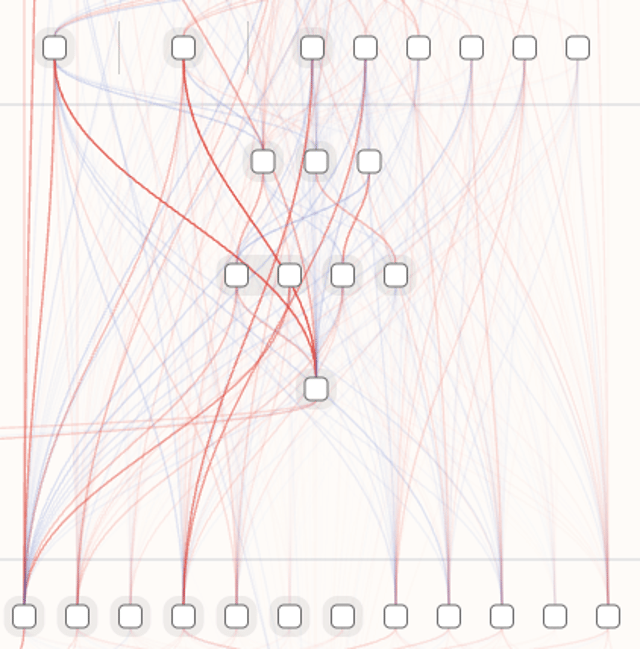
Interpreting Language Model Parameters
Can a model’s learned mechanisms be recovered directly from its parameters, without assuming that neurons, attention heads, or activation features are the correct units of analysis?
open week → -
 past WEEK 14 Aug 24
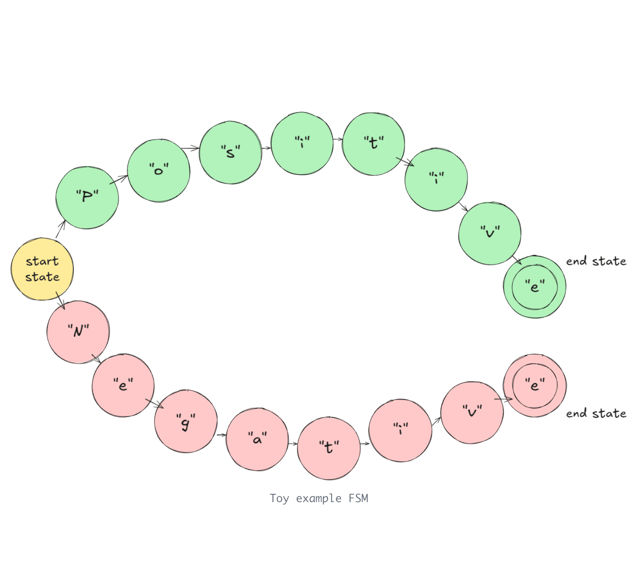
Inside vLLM: Anatomy of a High-Throughput LLM Inference System
How do modern LLM inference engines turn inherently sequential autoregressive generation into a high-throughput serving system? What systems bottlenecks emerge between a single model forward pass and serving thousands of concurrent requests across GPUs and machines?
open week → -
Summer 2026
wrapped -
watch the reel ↓ close ↑

-
past
WEEK 13 Aug 17Goedel-Prover: A Frontier Model for Open-Source Automated Theorem Proving
How do we accurately autoformalize natural language mathematics? How can we achieve a state-of-the-art model for theorem proving?
open week → -
 past WEEK 12 Aug 10
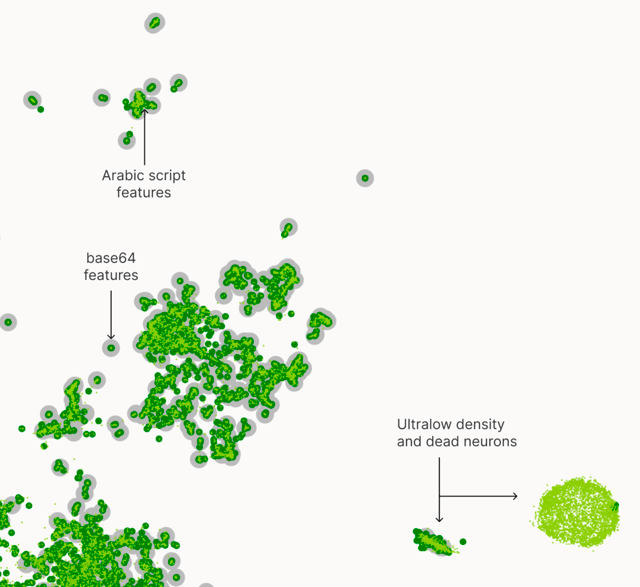
Towards Monosemanticity
Can we identify meaningful, human-interpretable features inside a language model when individual neurons are polysemantic and represent many unrelated concepts at once? Can sparse autoencoders recover the hidden features represented in superposition—and give us a better unit for mechanistic interpretability than neurons themselves?
open week → -
 past WEEK 11 Jul 27
Fundamental Limitations of Single-Vector Embeddings
Why does something as simple as “finding people who like apples” break our best models? What do alternatives like multi-vector models or cross-encoders mean for real products?
open week → -
 past WEEK 10 Jul 20
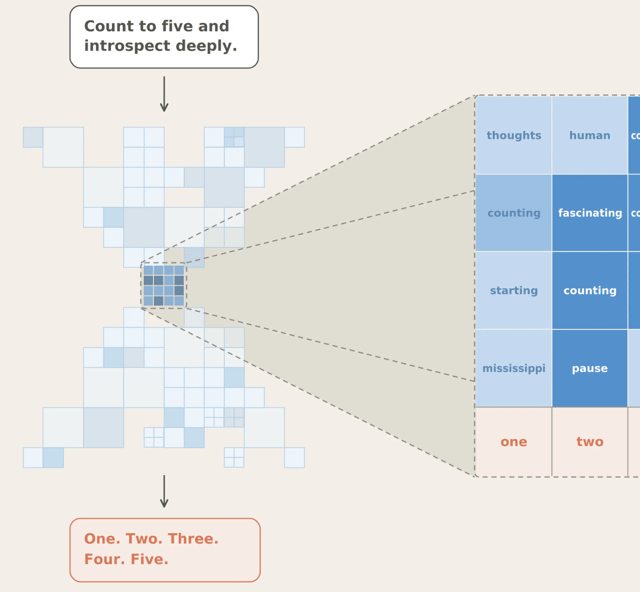
A global workspace in language models
How can we identify and understand the internal “workspace” where large language models integrate information, reason, and broadcast concepts across their networks? Can mechanistic interpretability reveal whether LLMs develop functional equivalents of global information sharing found in cognitive architectures?
open week → - 🎉 symposium week
 past WEEK 9 Jul 13
Symposium Week
A little different this week — no single paper. Bring something that excites you and present it: great creative work is historically done together, across backgrounds and disciplines, in small, high-trust groups.
open week → -
 past WEEK 8 Jul 6
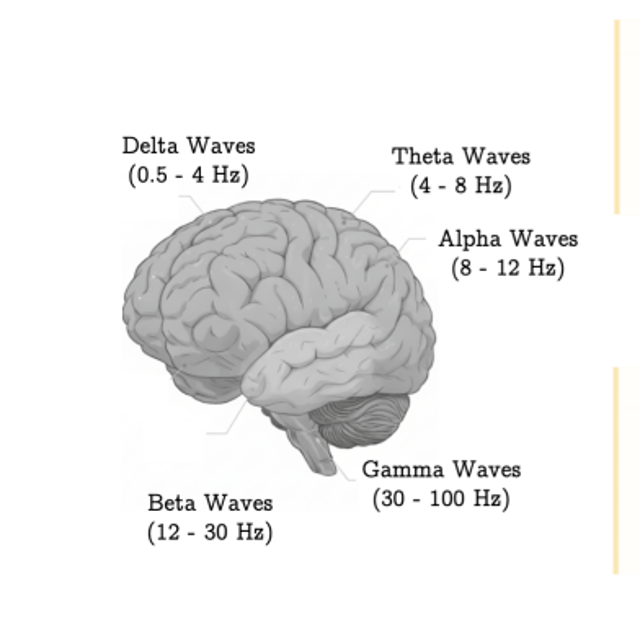
Nested Learning: The Illusion of Deep Learning Architectures
How might nested optimization structures allow models to generalize more efficiently by reusing global representations while adapting locally to new tasks? Could the hierarchical nature of nested learning make large models inherently more resilient to poisoning or backdoor attempts by isolating adversarial influence within inner-loop adaptations?
open week → -
 past WEEK 7 Jun 29
In-context Learning and Induction Heads
When does a model suddenly learn to learn — and can you spot the moment on the loss curve? If a circuit is defined to do nothing but copy random text, why does the same circuit also translate French?
open week → -
 past WEEK 6 Jun 22
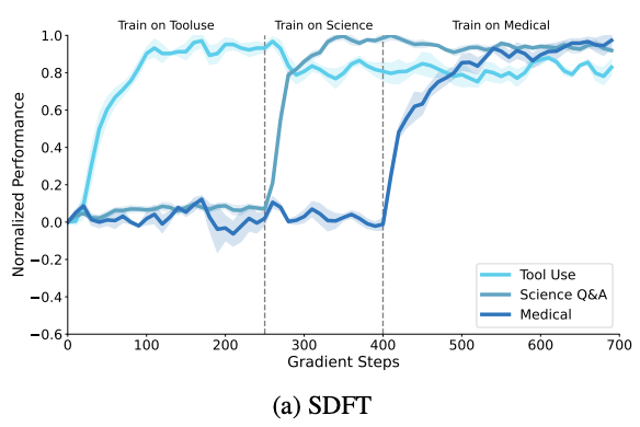
Self-Distillation Enables Continual Learning
Why does on-policy learning dramatically reduce catastrophic forgetting? Does SDFT outperform SFT, RLHF-style pipelines, and continual pre-training?
open week → -
 past WEEK 5 Jun 15
A Mathematical Framework for Transformer Circuits
What does it mean to “fully understand” a model — and is a one-layer transformer just a lookup table? If the residual stream is only a communication channel, where does the computation actually live?
open week → -
 past WEEK 4 Jun 8
Touching the Elephant — TPUs
What if the real moat in AI isn’t the model, but the chip? Should AI run on custom silicon or general-purpose chips?
open week → -
past
WEEK 3 Jun 1Tiny Recursive Models
Using just a single 2-layer network with 7M parameters, TRM outperforms much larger language models by recursively refining both its current answer and internal reasoning state.
open week → -
 past WEEK 2 May 25
LeJEPA: Provable and Scalable Self-Supervised Learning Without the Heuristics
LeJEPA pushes in the opposite direction: instead of stabilizing training with heuristics, it builds a system where the objective itself prevents collapse.
open week → - past WEEK 1 May 18
ML Reading Group
Ilya Sutskever: “If you really learn [these 30 papers], you’ll know 90% of what matters today.”
open week →